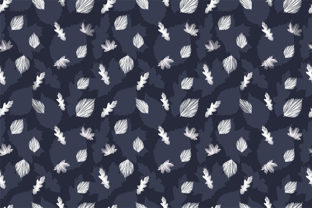
Designing with a Beautiful Seamless Vector Floral Pattern: Technical Versatility and Creative Application
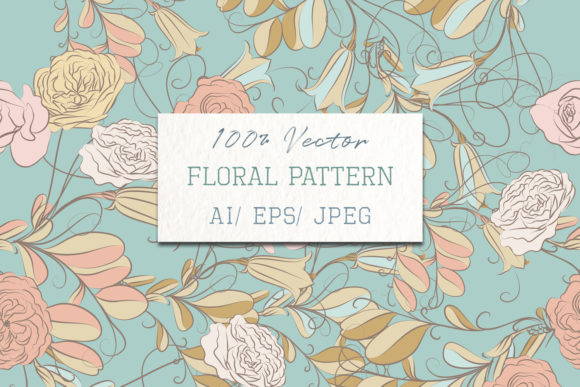
The intersection of organic aesthetics and digital precision defines modern surface design, and nowhere is this more apparent than in the utilization of a Beautiful Seamless Vector Floral Pattern. For designers, manufacturers, and hobbyists alike, the transition from raster imagery to vector-based florals represents a significant upgrade in workflow efficiency and output quality. Unlike pixel-based images that degrade when scaled, vector graphics maintain mathematical perfection at any size, making them the industry standard for everything from delicate jewelry engraving to large-scale architectural wall coverings. Understanding the dual-format delivery of these assets—specifically the inclusion of both a High-Quality Image JPEG and an .Eps File—is essential for maximizing their potential across diverse creative projects.
The Strategic Advantage of Dual-Format Asset Delivery
Professional design workflows rarely rely on a single file type. The provision of both EPS and JPEG formats addresses distinct stages of the creative process, ensuring that the asset remains useful from initial concept to final production.
The Role of the High-Quality Image JPEG
The High-Quality Image JPEG serves as the immediate visual reference and rapid prototyping tool. In the early stages of product development or client presentation, stakeholders often lack the software required to view raw vector files. A high-resolution JPEG allows for instant visualization of color balance, motif density, and overall aesthetic impact without technical barriers. This format is particularly valuable for:
- Digital Mockups: Quickly applying the pattern to 3D renders or Photoshop templates to visualize the end product.
- Client Approvals: Sending lightweight previews for feedback before committing to vector refinement.
- Web and Social Media: Utilizing the pattern for digital backgrounds where infinite scalability is unnecessary but visual fidelity remains important.
- Print-on-Demand Testing: Verifying color accuracy on specific substrates before running full vector production batches.
Unlocking Production Potential with the .Eps File
While the JPEG provides visibility, the .Eps File (Encapsulated PostScript) provides utility. This is the master source file that grants true ownership over the design's geometry. Because floral patterns are inherently organic, the ability to manipulate individual petals, stems, and leaves is crucial for custom adaptation. The EPS format ensures that curves remain smooth regardless of magnification, eliminating the jagged edges associated with zoomed-in raster images. This file type is non-negotiable for professional manufacturing, allowing for color separation, element isolation, and infinite resizing without data loss.
Transforming Textile and Fabric Manufacturing
The textile industry relies heavily on seamless repeats to minimize waste and ensure visual continuity across yardage. A Beautiful Seamless Vector Floral Pattern offers specific advantages for fabric and textile production that raster alternatives cannot match. In digital textile printing, vectors allow for precise color management and sharp definition even on high-thread-count materials. For traditional screen printing, the EPS file can be easily separated into individual color channels, reducing setup time and cost.
Beyond printing, vector florals are integral to jacquard weaving and embroidery digitizing. These processes require clean, closed paths to translate digital designs into physical thread movements. A seamless vector file provides the exact coordinates needed for automated machinery, ensuring that the floral motif repeats perfectly across thousands of yards of material. Designers can also adjust the scale of the repeat within the vector file to suit different garment types; a dense, small-scale repeat might be ideal for children’s wear, while a larger, more spaced-out arrangement could better suit upholstery or drapery.
Elevating Packaging and Gift Wrap Design
In the competitive market of retail packaging, unboxing experiences have become a critical touchpoint for brand identity. Gift wrap and packaging papers demand crisp lines and vibrant colors, both of which are hallmarks of vector artistry. When designing for gift wrap, the seamless nature of the pattern ensures that no matter how the paper is cut or folded, the visual flow remains uninterrupted. This continuity is psychologically pleasing and conveys a sense of premium quality.
The versatility of the .Eps File allows packaging designers to adapt the floral motif for various structural elements. The same pattern used on the wrapping paper can be scaled down for gift tags, adjusted for box liners, or simplified for embossing and foil stamping on rigid boxes. Because vectors are resolution-independent, a designer can use the exact same asset for a massive shipping box and a tiny jewelry card without creating multiple versions. This consistency strengthens brand recognition and streamlines the prepress process for packaging manufacturers.
Surface Design and Interior Architecture
For surface designer professionals and interior architects, wall treatments represent one of the most demanding applications for seamless patterns. Wallpaper production requires absolute precision in registration; even a millimeter of misalignment in a seam can ruin the illusion of a continuous garden. Vector-based seamless patterns eliminate this risk by providing mathematically perfect tile boundaries. Furthermore, walls vary significantly in dimension. With a vector master file, printers can adjust the scale of the floral repeat to fit specific wall heights without distorting the aspect ratio of the botanical elements.
Beyond wallpaper, these patterns serve as sophisticated background and backdrop solutions for event design and photography. Large-format printing for event backdrops often exceeds standard printer widths, requiring tiling or panel assembly. A seamless vector floral pattern ensures that these panels align perfectly, creating an immersive environment without visible grid lines or resolution artifacts. Event planners and set designers value the ability to customize the color palette of the EPS file to match specific wedding themes or corporate branding, turning a generic floral asset into a bespoke environmental element.
Ornamentation and Decorative Detailing
The application of floral vectors extends into three-dimensional ornament and decorative arts. Laser cutting and CNC routing machines interpret vector paths as cutting instructions. A complex floral pattern can be transformed into intricate wooden fretwork, acrylic cake toppers, leather appliqués, or metal screens. In these contexts, the "seamless" aspect allows for modular expansion; a designer can tile the pattern to fill a large door panel or isolate a single bloom for a piece of jewelry. The precision of the .Eps File ensures that delicate filigree details remain intact during the fabrication process, whereas raster-to-vector conversion tools often fail to capture such nuance accurately.
Technical Considerations for Seamless Integration
Achieving true seamlessness in a Beautiful Seamless Vector Floral Pattern requires more than just aligning edges; it demands an understanding of visual rhythm and negative space. When evaluating or modifying these assets, creators should consider several technical factors to ensure professional results.
Anchor Point Economy: Efficient vector files use the minimum number of anchor points necessary to define a curve. Excessive points can cause rendering issues in some RIP (Raster Image Processor) software used by textile printers and can make manual editing tedious. A well-constructed EPS file balances detail with computational efficiency.
Color Mode Compatibility: While vectors are flexible, color spaces are not. Designers must verify whether the EPS file is constructed in CMYK for print production or RGB for digital display. Converting between these modes can shift colors, particularly in vibrant floral hues like magentas and cyans. Maintaining separate master files for each color space is often best practice.
Layer Organization: Professional-grade vector patterns feature logical layer structures. Background elements, foreground blooms, and accent details should be separated. This organization allows users to toggle visibility, recolor specific elements, or remove parts of the pattern to create coordinating but distinct variations for a product line.
Maximizing Value Across User Groups
The accessibility of dual-format floral assets democratizes high-end design. Business owners can utilize the High-Quality Image JPEG for marketing materials and website headers without hiring a graphic designer for every minor update. Educators and researchers in textile history or botany can use these accurate representations for teaching materials and publications. Hobbyists working with home cutting machines benefit from the SVG-compatible nature of EPS files, enabling custom crafting projects that rival commercial products.
For professional creators, the value lies in time savings. Developing a truly seamless, botanically accurate vector floral pattern from scratch can take dozens of hours. Acquiring a professionally crafted asset allows designers to focus on application and customization rather than foundational drafting. This efficiency enables faster turnaround times for clients and greater experimentation in personal portfolios. Whether used as a primary focal point or a subtle textural layer, the combination of aesthetic beauty and technical robustness makes the seamless vector floral pattern an indispensable tool in the modern creative arsenal.