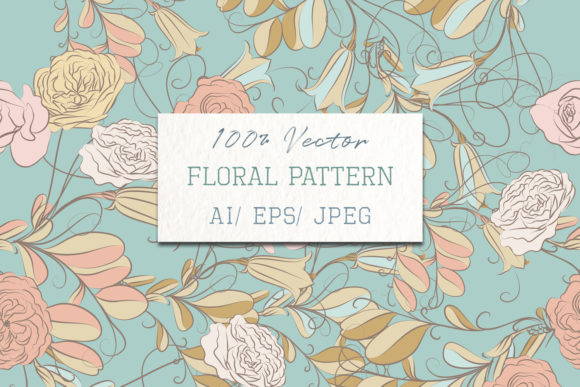
Floral Pattern with Vector Flowers: A Practical Guide to Quality and Usability
When searching for the perfect background or textile design, a Floral Pattern with Vector Flowers offers a distinct advantage over standard raster imagery. The primary appeal lies in the mathematical precision of vector art, which allows for infinite scaling without the pixelation or blurring associated with JPEGs or PNGs. For designers, marketers, and small business owners, this means a single asset can serve as a delicate business card background and a massive trade show banner simultaneously. However, the technical benefits of vector formats are frequently undermined by poor file selection, misunderstood compatibility, and overlooked aesthetic details. Understanding how to properly evaluate and utilize these assets is essential for maintaining professional quality in your creative projects.
The Misconception of Universal Compatibility
One of the most frequent mistakes creators make when acquiring a floral pattern with vector flowers and swirls 100 vector art collection is assuming that all vector files behave identically across different software platforms. While vectors are indeed scalable, they are not universally editable in every program. A common pitfall occurs when a designer purchases a bundle expecting full customization, only to discover that the intricate swirls and petal details have been expanded into uneditable shapes rather than remaining as adjustable strokes.
This distinction matters significantly for efficiency. If you need to change the line weight of a vine or adjust the curvature of a stem to fit a specific layout, expanded shapes require tedious redrawing. True utility comes from files where elements remain live and editable. Before downloading or purchasing, always verify whether the artwork consists of open paths or closed, expanded shapes. If your workflow requires color swapping or resizing individual botanical elements, prioritize files that explicitly state "fully editable" or "live strokes." Relying on a flattened vector file limits you to simple recoloring, negating much of the flexibility that makes vector art valuable in the first place.
Evaluating File Formats Beyond the Extension
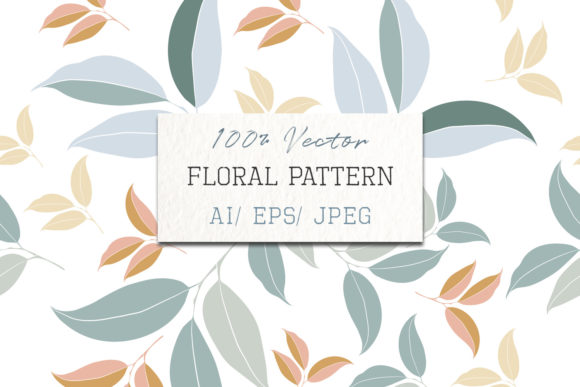
Receiving 1 AiCS2 file, 1 EPS10 file, and 1 JPEG preview 5000X5000 px is a solid industry standard, but users often misunderstand what these specific versions imply for their workflow. The AI CS2 format ensures backward compatibility with older versions of Adobe Illustrator, which is excellent for accessibility. However, some modern effects or gradient meshes used in newer floral designs may not render correctly in this legacy format. Conversely, the EPS10 file is the universal exchange format, yet it can sometimes lose layer organization during conversion.
To avoid frustration, do not rely solely on the file extension. Use the provided 5000x5000 px JPEG preview as your primary quality control checkpoint before opening the vector files. This high-resolution raster image serves as a visual contract; if the JPEG shows crisp details and smooth gradients, but the vector file appears broken or simplified, you know immediately that there is a version conflict. Always test the EPS10 file first if you are using non-Adobe software like Affinity Designer or CorelDRAW, as this format generally offers better cross-platform translation than native AI files. Checking these details upfront prevents hours of troubleshooting mid-project.
Aesthetic Pitfalls: Hand-Drawn Feel vs. Digital Rigidity
Vector versions allow you infinite scaling while preserving beautiful hand-drawn characteristics, but this preservation is not automatic. A significant oversight in selecting floral patterns is ignoring the balance between mathematical cleanliness and organic imperfection. Many low-quality vector florals suffer from excessive node counts or overly rigid bezier curves that make flowers look plastic or stamped rather than illustrated.
When evaluating a floral pattern with vector flowers, zoom in to 400% or higher. Look at the anchor points on the petals and leaves. Clean, professional vector art uses the minimum number of nodes necessary to create a smooth curve. Excessive nodes result in jagged edges when scaled down and bloated file sizes that slow down your design software. Furthermore, ensure the "hand-drawn" aesthetic includes natural variation. Perfect symmetry in nature is rare; if every rosebud in the pattern is an identical clone rotated at fixed intervals, the design will feel sterile and mass-produced. High-quality vector art incorporates subtle variations in stroke width and shape to mimic the nuance of traditional media. Choosing art that prioritizes organic flow over geometric perfection ensures your final product feels premium and artisanal rather than generic.
Color Management and Print Readiness
Another critical area where mistakes occur is in color space assumption. Vectors are mathematically defined, but their color values are tied to specific color profiles. A vibrant floral pattern viewed on an RGB monitor may translate to muddy, desaturated tones when printed in CMYK. Users often assume that because the lines are sharp, the colors will be equally accurate. This is a dangerous assumption for anyone producing physical goods like packaging, textiles, or stationery.
Before committing a floral pattern to print, verify the document’s color mode. If the downloaded AI or EPS file is in RGB, convert it to CMYK immediately and check for gamut warnings. Some neon or highly saturated digital colors simply cannot be reproduced with ink. Additionally, check how gradients are constructed within the vector file. Complex mesh gradients can cause banding or printing errors on certain commercial presses. Flat colors or simple linear gradients are safer for professional printing. Taking five minutes to audit the color profile saves costly reprint fees and client dissatisfaction later.
Licensing and Usage Rights Verification
Technical quality is irrelevant if you lack the legal right to use the asset for your intended purpose. A common error among entrepreneurs and freelancers is conflating "personal use" licenses with "commercial use" rights. Just because a floral pattern with vector flowers and swirls 100 vector art set is affordable or available on a marketplace does not mean it is cleared for merchandise, branding, or resale.
Always read the license agreement specifically regarding derivative works. Some licenses allow you to use the pattern as a background but prohibit using the isolated vector flowers as standalone logos or trademarked elements. Others may restrict the number of units you can produce or require attribution. Overlooking these terms can lead to cease-and-desist letters or platform takedowns. Treat licensing verification with the same rigor as technical inspection. If your project involves selling products featuring the floral design, ensure your license explicitly covers commercial reproduction. When in doubt, contact the creator directly for clarification rather than making assumptions based on price or availability.
Optimizing Workflow with High-Resolution Assets
Finally, consider the practical implications of file size and complexity. While vectors are lightweight compared to massive raster images, a detailed floral pattern containing hundreds of unique botanical elements can still strain system resources. Beginners often drag the entire master file into their layout, causing lag and crashes. A more efficient approach is to isolate only the specific elements you need.
Create a working copy of the vector file and delete unused artboard elements before importing them into your main project. This keeps your active document lean and responsive. Additionally, utilize the 5000x5000 px JPEG preview for initial mockups and client approvals. There is no need to manipulate heavy vector data until the design direction is confirmed. By separating the conceptual phase from the production phase, you maintain speed without sacrificing the eventual quality that only vector art can provide. This disciplined approach to asset management distinguishes professional workflows from amateur ones, ensuring that the beauty of the floral pattern enhances your work rather than hindering your productivity.